The 2026 shift from processing to settlement
For years, the primary value of AI invoicing lay in data extraction—pulling line items from PDFs and matching them to purchase orders. By 2026, that capability is table stakes. The real disruption is moving from document processing to real-time settlement. AI agents now integrate directly with payment rails, including stablecoins, to reduce days sales outstanding (DSO) by closing the gap between invoice approval and fund receipt.
Traditional accounts receivable cycles rely on manual follow-ups and batched ACH transfers that take days to clear. AI-driven workflows change this by triggering payment instructions the moment an invoice is approved. When paired with stablecoin settlement, funds can move across borders in seconds, bypassing the friction of correspondent banking and reducing reconciliation errors.
This shift transforms invoicing from a back-office administrative task into a strategic cash flow tool. Companies leveraging AI for both data extraction and settlement see payment delays drop significantly, with some reporting reductions of up to 40% in days to payment. The technology no longer just records the transaction; it executes the financial movement.
AI extraction accuracy hits 99.5 percent
The baseline for intelligent document processing (IDP) has shifted dramatically. According to 2026 industry data from ABBYY, organizations deploying advanced AI now achieve 99.5% field-level accuracy on invoice data. This is not a marginal improvement; it is the threshold where manual verification becomes largely obsolete for standard documents.
This precision means AI can reliably extract complex fields—such as line-item taxes, multi-currency amounts, and dynamic vendor codes—without human intervention. For finance teams, this reduces the Days Sales Outstanding (DSO) by cutting the time spent on data entry and error correction. The remaining 0.5% of errors typically occur only on severely damaged or non-standard documents, which can be routed to exception handling workflows.
With this level of confidence, accounts payable can move beyond simple automation. High-fidelity extraction enables the immediate validation of invoices against purchase orders and contracts, paving the way for more complex financial instruments like automated escrow and stablecoin settlements, where data integrity is non-negotiable.
Stablecoin escrow solves cross-border friction
Cross-border B2B payments have long been bottlenecked by the disconnect between invoice generation and actual settlement. AI invoicing can automate the creation and routing of documents, but it cannot solve the underlying friction of foreign exchange risk and slow correspondent banking rails. Stablecoin escrow bridges this gap by using smart contracts to hold funds until specific, verifiable conditions are met, effectively turning international trade into a near-instant, low-risk transaction.
In a traditional wire transfer, money moves through multiple intermediaries, each adding fees and delays. A shipment from Shanghai to Berlin might take three to five business days to clear, during which the exporter faces currency fluctuation risk and the importer holds working capital hostage. With stablecoin escrow, the buyer deposits USDC or USDT into a smart contract. The AI invoicing system monitors delivery confirmation—via IoT sensors or digital signatures—and automatically triggers the release of funds to the seller. This reduces the Days Sales Outstanding (DSO) from weeks to minutes.
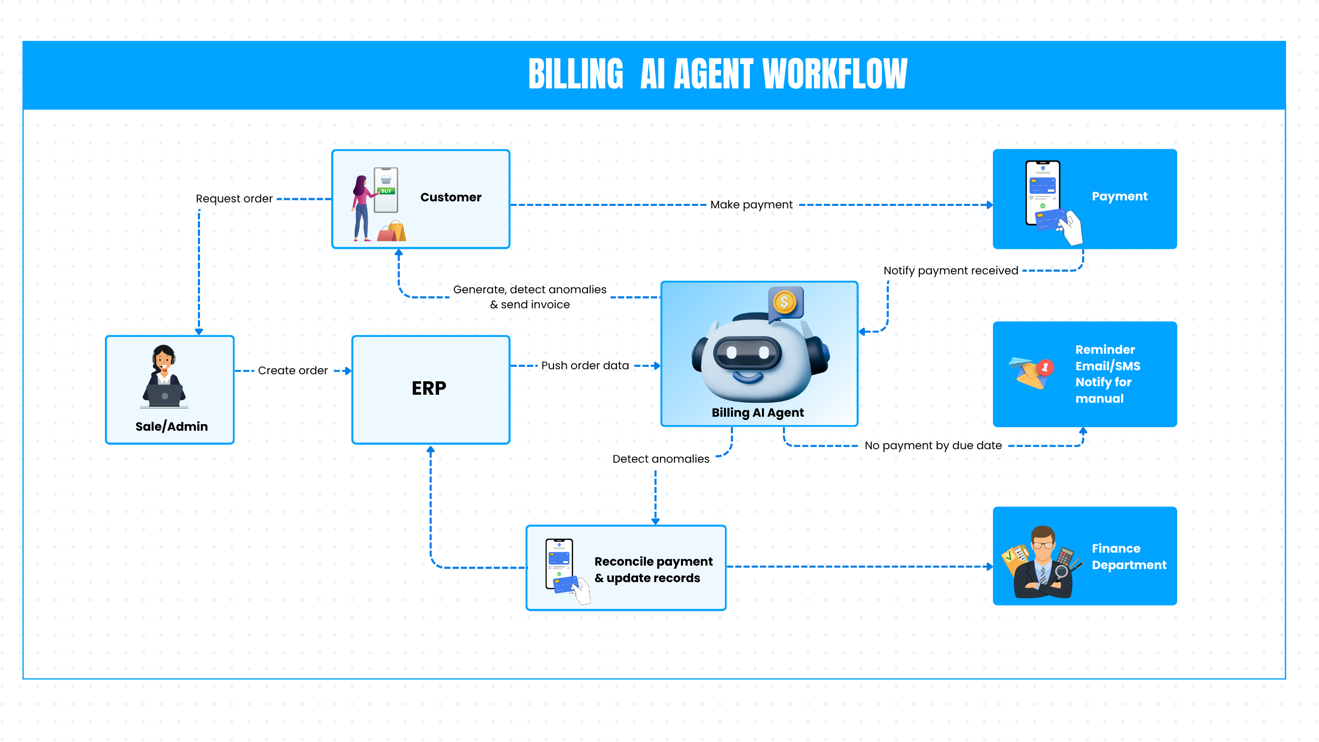
The visual workflow of this system replaces ambiguous paper trails with immutable code. An AI-generated invoice triggers the escrow smart contract, which holds the stablecoin until delivery is confirmed. Once the condition is met, the funds are released instantly to the supplier’s wallet, eliminating the need for manual reconciliation or chase emails.
This combination of AI and blockchain addresses two critical metrics: accuracy and speed. AI ensures the invoice data matches the purchase order and delivery receipt with near-perfect accuracy, reducing disputes. Stablecoin escrow removes the FX spread and intermediary fees, often cutting transaction costs by 60-80% compared to traditional SWIFT transfers. For high-volume B2B trade, this means working capital turns over faster, and cash flow becomes predictable rather than dependent on banking hours and holidays.
Comparing top AI invoicing platforms for 2026
The 2026 landscape for AI invoicing has shifted from basic optical character recognition to intelligent, context-aware processing. Leading platforms now prioritize two metrics: field-level extraction accuracy and settlement flexibility. According to ABBYY, organizations deploying intelligent document processing now achieve 99.5% field-level accuracy, with 90% time savings on invoice processing workflows [src-serp-2]. This precision reduces the manual reconciliation burden that previously defined accounts payable.
Beyond extraction, the differentiator for 2026 is how these tools handle the final payment leg. While traditional ERP integrations remain standard, top-tier solutions are increasingly embedding stablecoin settlement options or smart escrow mechanisms. This allows finance teams to bypass legacy banking rails for cross-border transactions, reducing settlement times from days to minutes.
The table below compares four leading platforms based on their AI accuracy rates, integration depth, and support for modern settlement methods.
| Platform | AI Accuracy | Integration Depth | Settlement Options |
|---|---|---|---|
| Energent.ai | 94.4% | API-first, ERP-native | Escrow, Fiat |
| ChatFin AI | 99.5% | Cloud-native, Open API | Stablecoin, Fiat |
| Telic Digital | 98.2% | SAP, Oracle, NetSuite | Fiat, Wire |
| ABBYY Vantage | 99.5% | Legacy ERP, Cloud | Fiat, ACH |
Reducing DSO and Stabilizing Cash Flow
The shift from manual processing to AI-driven workflows with stablecoin settlements delivers immediate liquidity gains. By automating data extraction and validation, companies eliminate the days lost to manual entry errors and approval bottlenecks. When combined with stablecoins, which settle in minutes rather than days, the entire Accounts Receivable cycle compresses significantly.
Consider a mid-market B2B firm processing 500 invoices monthly. Traditional methods often result in a 45-day Days Sales Outstanding (DSO) due to payment term mismatches and manual reconciliation delays. AI invoicing tools reduce administrative lag by flagging discrepancies instantly, while stablecoin payments remove the 2-5 day banking settlement window. This combination can cut DSO by 30-40%, freeing up working capital that was previously trapped in transit.
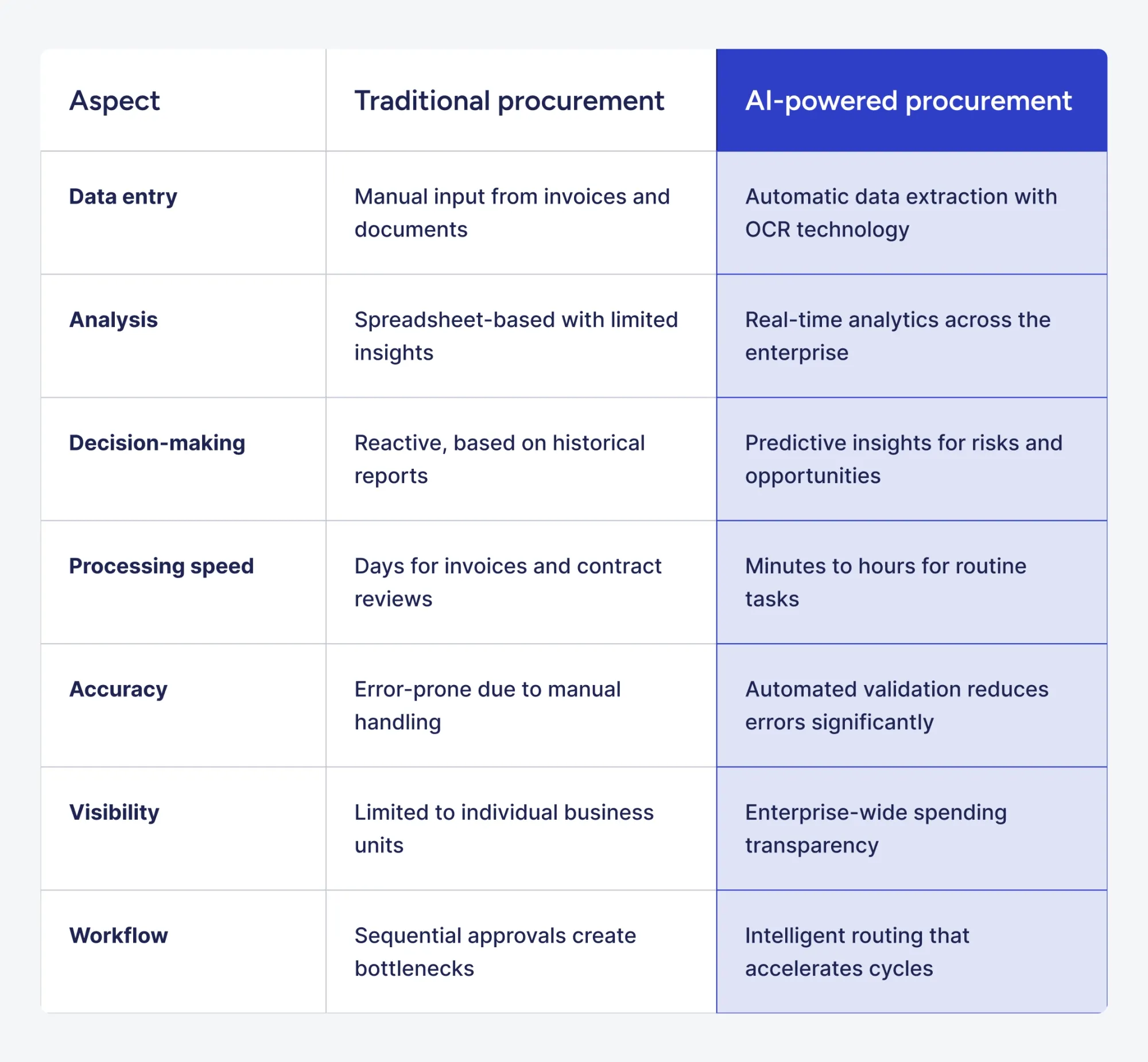
The visual below illustrates the stark contrast between legacy procurement friction and AI-powered efficiency. The reduction in payment delays directly translates to improved cash flow predictability, allowing finance teams to reinvest capital faster rather than waiting for traditional bank clearances.
No comments yet. Be the first to share your thoughts!