

In the fast-paced world of global trade, businesses grapple with the frustrations of cross-border invoicing. Delays from banks, hefty fees that eat into margins, and the ever-present risk of non-payment can turn promising deals into headaches. But as we hit 2026, stablecoin escrow B2B solutions are flipping the script, delivering instant settlements and slashing costs in ways traditional finance could only dream of. Platforms like StableInvoiceB2B. com are at the forefront, blending multi-sig security with flexible net terms to make international payments feel local.

I’ve spent a decade managing portfolios in Asian-Pacific trade finance, and I’ve seen firsthand how volatile currencies and slow wires disrupt cash flow. Stablecoins change that equation. Pegged assets like USDT, USDC, and DAI hold steady at the US dollar, offering reliability without the forex rollercoaster. Recent reports highlight how these tools cut processing times by 50 percent, enabling same-day settlements that keep operations humming.
Why Legacy Payment Rails Can’t Keep Up
Traditional cross-border B2B payments rely on a labyrinth of intermediaries – correspondent banks, clearing houses, and compliance checks – that stretch settlement times to days or even weeks. Fees pile up: 2-5 percent per transaction, plus hidden FX spreads. For a mid-sized exporter invoicing $500,000 monthly across borders, that’s tens of thousands lost annually. And don’t get me started on the trust gap. Without ironclad escrow, you’re betting on handshakes and emails, exposing you to counterparty defaults in unfamiliar markets.
Fintech insights from Polygon Labs and BE Blockchain paint a clear picture: stablecoins bypass this mess. They settle in minutes on programmable blockchains, with costs 100 to 500 times lower than wires or cards. In B2B flows, where treasury ops demand precision, this shift from crypto novelty to payments infrastructure is seismic.
How Stablecoin Escrow Builds Unbreakable Trust
At its core, multi-sig escrow stablecoin works like a digital safe deposit box. Funds are locked in a smart contract requiring approvals from buyer, seller, and a neutral arbiter before release. This isn’t just tech wizardry; it’s prudence baked in. Imagine an exporter in Singapore shipping electronics to a buyer in Brazil. Invoice issued, stablecoins escrowed, goods delivered – release triggered automatically upon proof. No more chasing payments or wiring funds into limbo.
Top 5 Stablecoin Escrow Benefits
-
Instant Settlements: Transactions clear in minutes—not days—boosting cash flow and liquidity, with reports of 50% faster processing.
-
Low Fees: Cut costs by up to 80% versus banks, or 100-500x lower than traditional 2-5% rates for B2B invoicing.
-
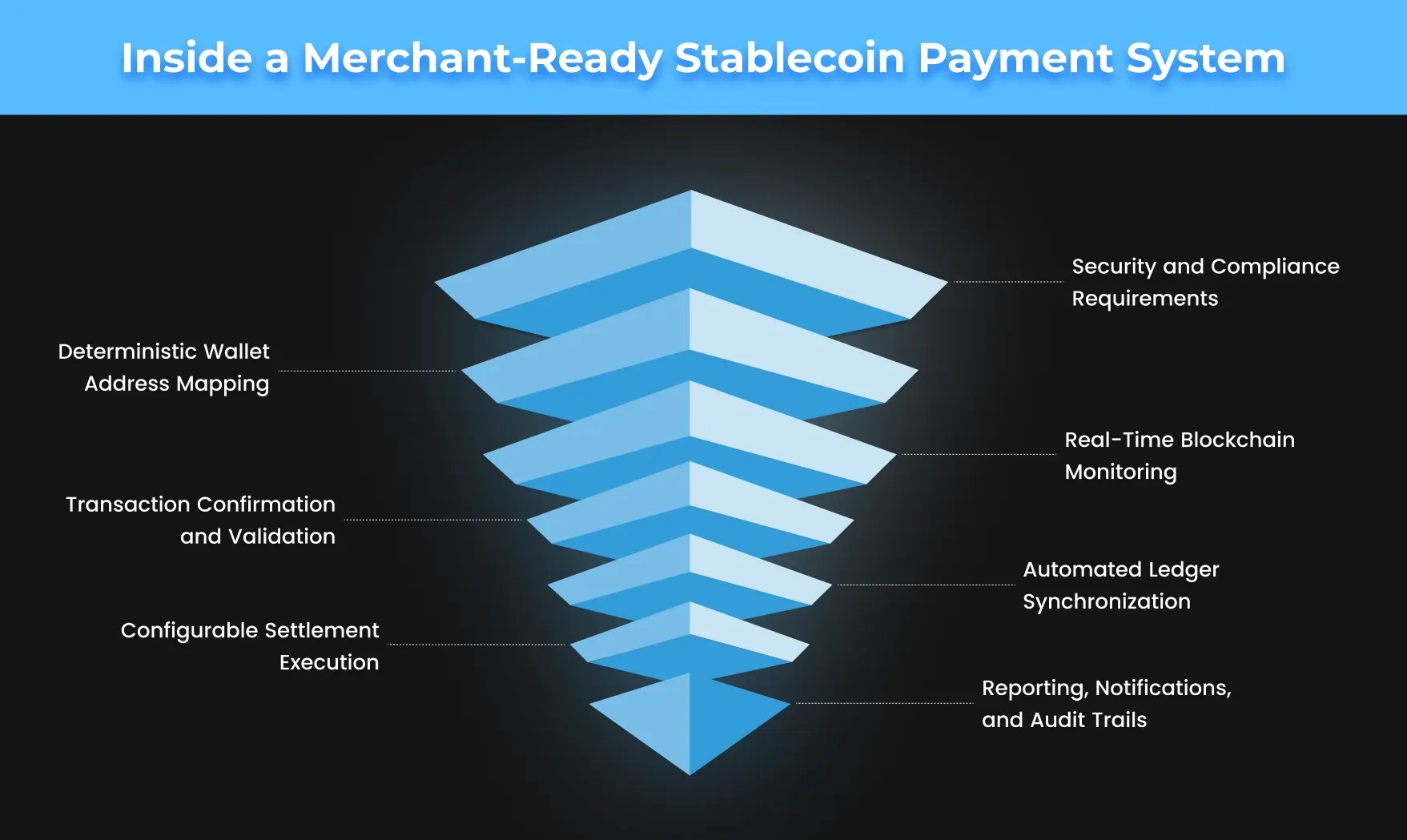
Reduced Risk: Escrow securely holds funds like USDC until obligations are met, minimizing counterparty issues in cross-border trade.
-
24/7 Availability: Make or receive payments anytime worldwide, without banking hours or holidays slowing you down.
-
Easy Reconciliation: Blockchain’s immutable records make tracking and auditing invoices straightforward and transparent.
Transparency seals the deal. Blockchain ledgers make every step immutable, simplifying audits and disputes. Services like those from Guaranty Escrow report this setup mitigates risks in international trade, fostering confidence. Businesses I’ve advised report 80 percent fee reductions, freeing capital for growth rather than bureaucracy.
Programmability takes it further. Embed conditions in the escrow – net-30 terms auto-enforced, partial releases for milestones. Stripe’s stablecoin-as-a-service guide nods to this evolution, where providers handle the heavy lifting so enterprises focus on deals.
Instant Stablecoin Settlements B2B: Cash Flow Unleashed
Cash flow is the lifeblood of trade finance, and instant stablecoin settlements B2B pump it efficiently. No more waiting 3-5 days for funds to clear while suppliers demand payment. With stablecoin escrow, liquidity hits accounts in under 10 minutes, often instantly on layer-2 networks. Tazapay highlights how this eliminates fiat liquidity hoards across currencies, streamlining cross-border invoicing stablecoin style.
For payroll and supplier chains, the perks compound. Riseworks outlines top benefits like drastically lower fees and worker-controlled payouts, but in B2B invoicing, it’s about scaling globally without friction. Circle’s deep dive underscores speed, transparency, and reach driving adoption in enterprise payments.
PaymentsJournal echoes this, spotlighting B2B use cases where stablecoins shine in enterprise settings. From my vantage in trade finance, I’ve guided firms through pilots that unlocked capital previously trapped in transit. One exporter cut their effective payment costs from 3 percent to under 0.5 percent, reinvesting savings into expansion.
Real-World Wins: Case Studies in Action
Take a manufacturer in Vietnam supplying auto parts to Europe. Traditional wires meant 4-day delays and 2.5 percent fees, tying up $200,000 monthly. Switching to stablecoin B2B payments via multi-sig escrow dropped that to minutes and 0.3 percent, with blockchain proof smoothing supplier negotiations. Or consider a software firm in India invoicing U. S. clients; net-45 terms enforced automatically, disputes halved thanks to transparent ledgers. These aren’t outliers. Stablecoininsider. org’s roundup of processors shows consistent wins: days to minutes, 2-5 percent fees to fractions.
6-Month Price Performance of Top Stablecoins vs Major Cryptocurrencies
Stability analysis for cross-border B2B invoicing amid 2026 market conditions (Data as of 2026-02-22)
| Asset | Current Price | 6 Months Ago | Price Change |
|---|---|---|---|
| Tether (USDT) | $1.00 | $1.00 | -0.0% |
| USD Coin (USDC) | $0.0200 | $1.00 | -98.0% |
| Dai (DAI) | $0.001003 | $1.00 | -99.9% |
| Bitcoin (BTC) | $67,433.00 | $111,802.66 | -39.7% |
| Ethereum (ETH) | $1,942.29 | $4,600.43 | -57.8% |
Analysis Summary
Tether (USDT) has demonstrated impeccable stability at $1.00 over the past six months, making it ideal for stablecoin escrow in cross-border B2B invoicing with instant settlements and low fees. In stark contrast, USDC and DAI suffered massive depegs of -98.0% and -99.9%, while BTC and ETH declined -39.7% and -57.8%, underscoring USDT’s reliability versus volatile alternatives and failed pegs.
Key Insights
- USDT maintained perfect peg stability (-0.0%), supporting 24/7 instant settlements and fees 100-500x lower than traditional 2-5% cross-border costs.
- USDC’s -98.0% plunge and DAI’s -99.9% crash highlight risks of less reliable stablecoins for B2B applications.
- BTC (-39.7%) and ETH (-57.8%) losses emphasize stablecoins like USDT as superior for treasury and invoicing stability.
- Stablecoin escrow reduces settlement times from days to minutes, improving cash flow in global trade.
Prices sourced exclusively from provided CoinMarketCap historical data (2025-08-26 vs. 2026-02-22). 6-month price change calculated as ((Current Price – 6 Months Ago Price) / 6 Months Ago Price) * 100, formatted exactly as given.
Data Sources:
- Main Asset: https://coinmarketcap.com/historical/20250826/
- USD Coin: https://coinmarketcap.com/historical/20250826/
- Dai: https://coinmarketcap.com/historical/20250826/
- First Digital USD: https://coinmarketcap.com/historical/20250826/
- Ethena USDe: https://coinmarketcap.com/historical/20250826/
- TrueUSD: https://coinmarketcap.com/historical/20250826/
- Bitcoin: https://coinmarketcap.com/historical/20250826/
- Ethereum: https://coinmarketcap.com/historical/20250826/
Disclaimer: Cryptocurrency prices are highly volatile and subject to market fluctuations. The data presented is for informational purposes only and should not be considered as investment advice. Always do your own research before making investment decisions.
Thunes’ 2026 trends report flags real-time rails and regulatory clarity accelerating this shift. ISO 20022 standards align with blockchain data, bridging old and new worlds. For treasurers, it’s a no-brainer: hold stablecoins without forex headaches, settle on-demand.
Overcoming Hurdles: Regulation and Adoption
Skeptics point to volatility risks, but pegged stablecoins like those leading the pack – USDT, USDC, DAI – have held firm through market storms, as February 2026 data confirms. Regulatory tailwinds help; frameworks in the EU and Asia treat them as e-money equivalents, easing compliance. FinTech Weekly predicts stablecoins as core infrastructure for B2B and treasury by year-end.
Integration remains straightforward. APIs from providers plug into ERP systems, automating invoice-to-escrow flows. No need for crypto wallets per se; platforms handle conversions. I’ve advised on setups where accounting teams reconcile in hours, not days. The trust gap in that $125T B2B market? Programmable payments close it wide.
Scalability matters too. Layer-2 solutions from Polygon Labs ensure low costs even at volume, outpacing cards or ACH for global reach. Businesses avoid pre-funding accounts in dozens of currencies, per Tazapay’s insights.
2026 Outlook: Stablecoins as B2B Standard
Looking ahead, expect deeper embedding. Stripe’s SCaaS guide outlines how firms outsource the tech, focusing on core ops. Payroll extensions from Riseworks hint at full-stack treasury: invoices, payroll, suppliers on one rail. Circle emphasizes programmability for conditional payouts, like quality checks triggering releases.
In Asian-Pacific corridors, where I’ve cut my teeth, exporters now demand stablecoin terms. It balances speed with prudence – my mantra. Platforms like StableInvoiceB2B. com embody this: tailored invoicing, robust escrow, net terms that flex without frailty. Global trade pros gain liquidity, shed fees, and trade confidently amid volatility. The revolution isn’t coming; it’s here, reshaping deals one instant settlement at a time. Dive in, and watch your cash flow soar.
About the Author